Optiview
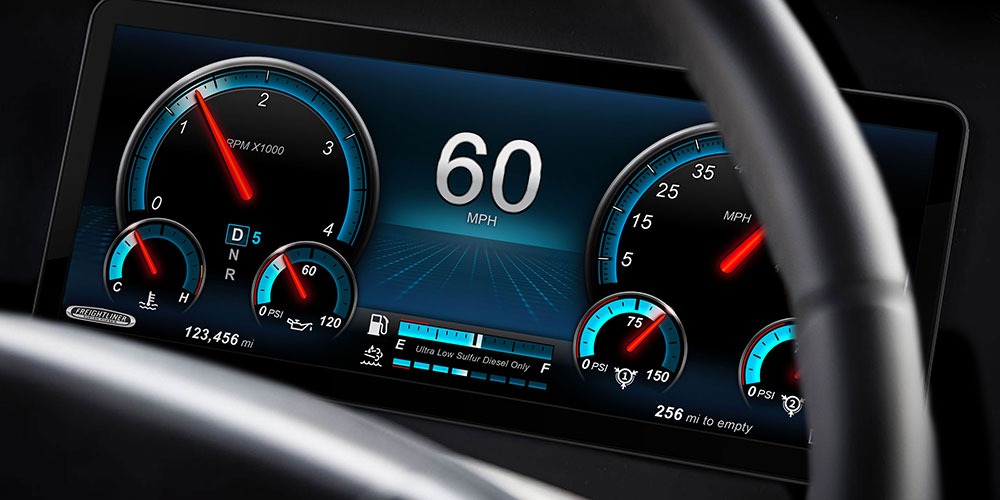
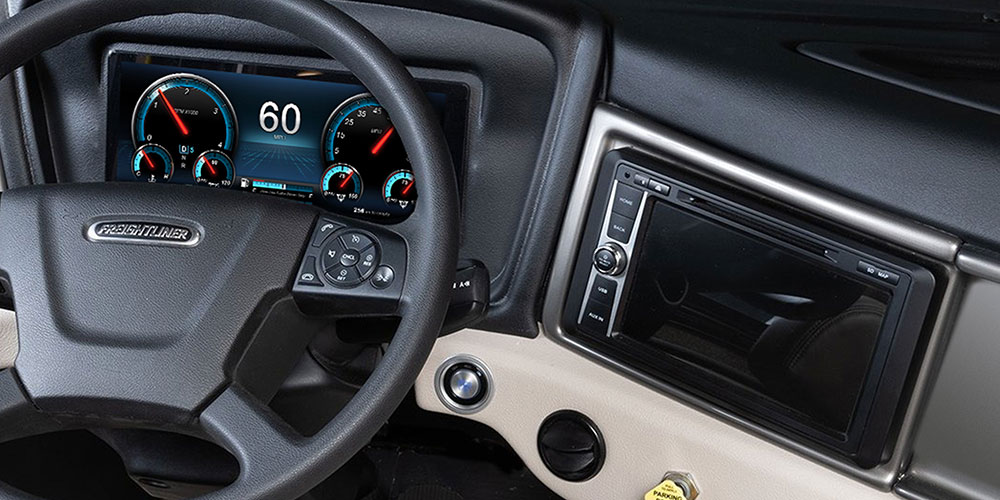
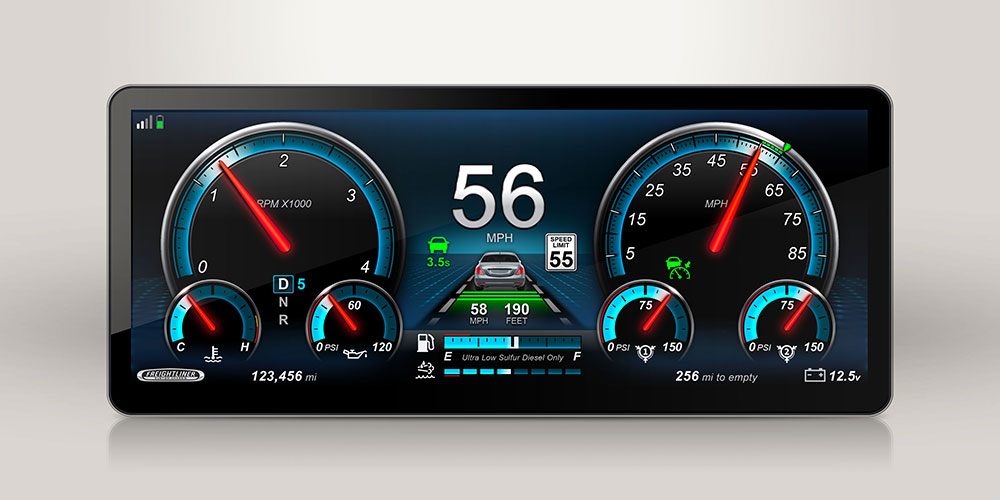
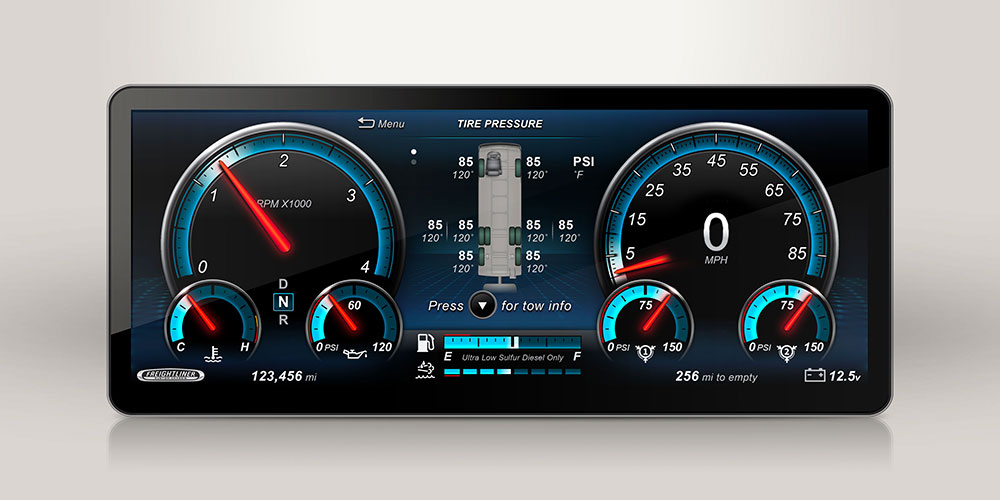
Freightliner Custom Chassis, the leading manufacturer of diesel chassis for recreational vehicles, offers drivers a comfortable ride, exceptional handling, and an OptiView 12.3” digital instrument cluster to enhance usability, driving experience, and driver ergonomics. The Optiview cluster features an intuitive interface designed to accommodate a wide range of drivers with varying backgrounds and technological expertise. The gauge layout and information presented on the cluster can be customized to suit each driver’s preferences. Additionally, the assistance graphics provide comprehensive details about the onboard safety systems.
Responsibilities
- HMI Architecture & UI Design: Developed the visual language and layout for a 12.3” digital cluster, prioritizing glance time and cognitive load reduction.
- Iterative User Testing: Facilitated interviews and analyzed survey data to refine the interface based on the specific ergonomic needs of RV drivers.
- Quantitative User Validation: Utilized surveys and data analysis to iterate on UI layouts based on real-world driver feedback and performance.
- In-Field Contextual Research: Conducted on-site user research with RV owners to identify pain points in traditional analog-to-digital transitions.
- Ergonomic User Interface Design: Optimized the 12.3” display for a diverse demographic of recreational drivers, ensuring high visibility across varying lighting conditions.
- ADAS Visual Integration: Designed rich assistance graphics to communicate complex data from onboard safety systems and collision-avoidance sensors.
- HMI Safety Compliance: Applied ISO standards to UI/UX development, prioritizing cognitive load reduction and streamlined driver interactions.
- Competitive Benchmarking: Conducted comprehensive heuristic evaluations of multi-modal displays for passenger cars and recreational vehicles to identify UX optimization opportunities.
- Technical Specification Documentation: Authored comprehensive HMI specifications to bridge the gap between creative design and software engineering.
- HMI Engineering Specifications: Authored detailed technical documentation defining animations, state changes, and signal logic for the development team.